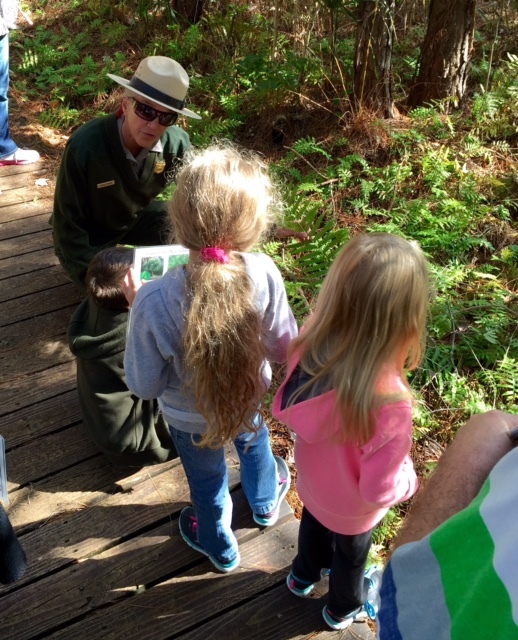
Children do not need to memorize an environmental code to become thoughtful hikers. They need a few repeatable habits, modeled by the adults walking with them. This guide translates the seven Leave No Trace principles into small actions families can practice on a day hike.
Start before you leave home
Choose a route suited to the youngest walker, check the park’s current rules and weather, and bring a small bag for wrappers and food scraps. Give children one clear responsibility, such as keeping their own snack packaging until the next stop. For broader preparation, see our family day-hike packing checklist.
1. Stay on the established trail
Explain that shortcuts can damage plants and widen paths. In busy areas, walk on the maintained trail even where the surface is muddy, unless the trail manager has closed it. If the route is too wet or damaged for your group, choose another trail rather than creating a parallel track.
2. Bring everything back
Turn the final rest stop into a two-minute litter check. Food scraps, including fruit peels, belong in the pack-out bag rather than beside the trail. Keep the bag where adults can inspect it before returning home.
3. Look closely; leave objects in place
Try a photo scavenger hunt: find an interesting leaf, rock texture, or flower without collecting it. Explain that other visitors and wildlife benefit when natural objects remain where they belong. Do not build new rock piles; these may confuse navigation or disturb habitat.
4. Watch wildlife without approaching
Stop at a distance and let animals choose where to go. Never offer food. If an animal changes its behavior because your group is close, increase the distance. A quiet observation game is often more rewarding than chasing a closer photograph.
5. Keep voices and devices considerate
Ask children to listen for birds, wind, or water for thirty seconds. Keep music off speakers and step aside where other groups need to pass. This is not about demanding silence from children; it is about sharing a public space.
6. Treat breaks as part of trail care
Choose durable, already-used stopping spots where possible. Avoid crushing vegetation at the trail edge. Keep food secured and gather every crumb or wrapper before moving on.
7. Adapt to local rules
Leave No Trace is a framework, not a substitute for local regulations. Rules on dogs, fires, waste disposal, fragile habitats and trail closures vary by location. Read posted signs and follow the land manager’s guidance.
A five-minute family challenge
Before the hike, ask each child to choose one habit: trail staying, litter collection, wildlife distance, quiet listening, or checking the rest spot. At the finish, ask what worked and what they would change. This turns outdoor ethics into practice rather than a lecture.
For route choice and pacing, continue with Hiking With Kids and How Far Can Kids Hike?.