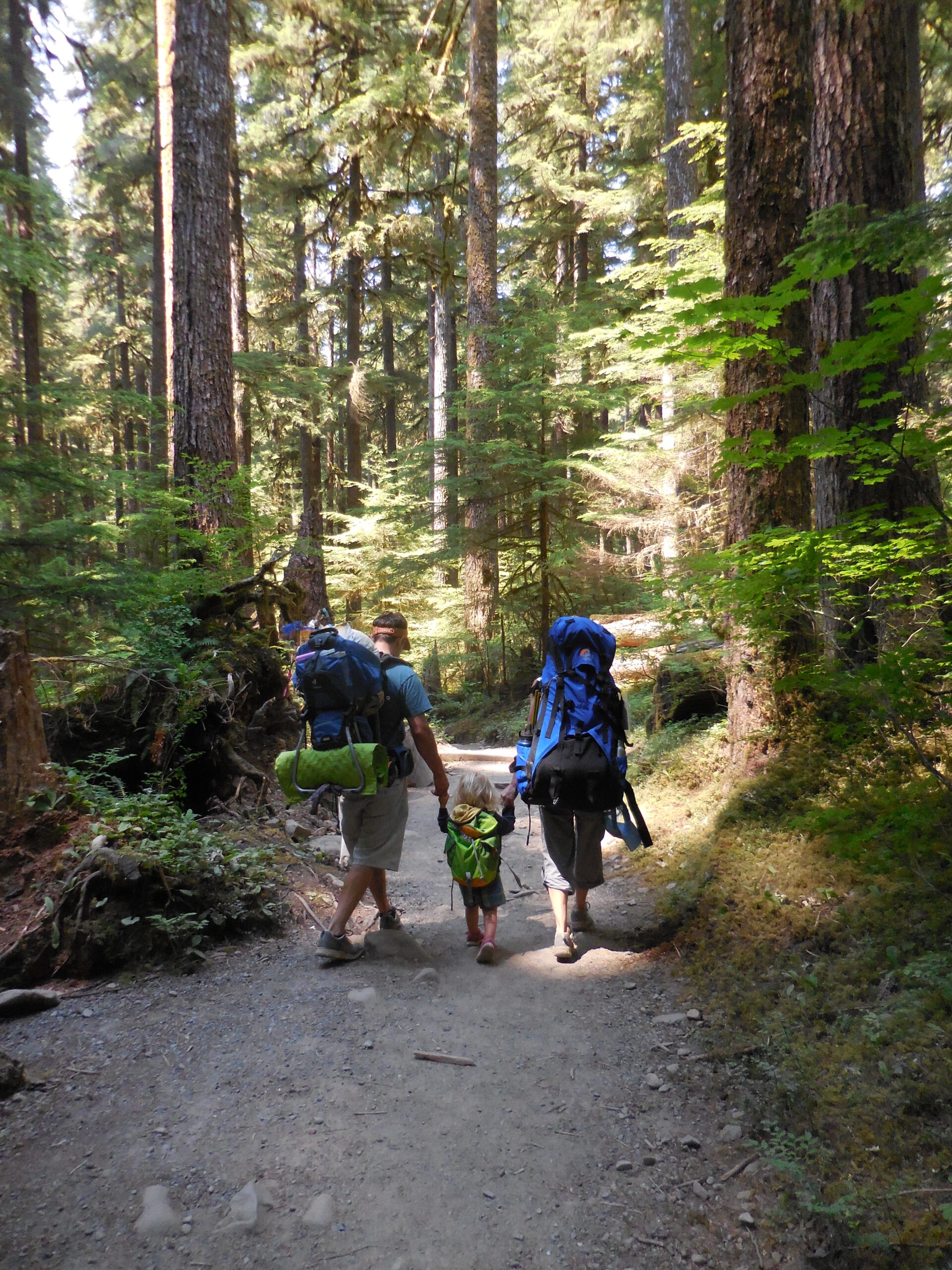
A successful family hike is not always the one that reaches the farthest viewpoint. Children often enjoy the details along the way: unusual bark, moving clouds, animal tracks or a stream crossing. Instead of treating stops as delays, build a few simple activities into the route.
Choose a route that leaves time for discovery
Shorter routes with several natural points of interest often work better than a long trail with a single destination. Before leaving, identify a realistic turnaround point and an easier alternative. Our family hiking guide covers route choice, pacing and changing plans. Use our age-by-age distance planning guide as a starting point, then adjust for your own children and conditions.
Play observation bingo
Make a list of things children can spot without touching: a forked branch, three shades of green, a bird call, a smooth rock, a bridge or a cloud shadow. The goal is noticing, not collecting. Swap the list based on the habitat and season.
Give everyone a trail job
Rotate small roles: map reader, rest-stop checker, snack organizer or wildlife spotter. Adults remain responsible for navigation and safety decisions. A child holding a paper map can still help identify the next junction or landmark.
Try a listening minute
Pause together for sixty seconds and count different sounds. Afterward, compare what everyone heard. This creates a natural break and encourages quieter trail behavior without requiring children to stay silent for an entire hike.
Use a photo-only nature challenge
Invite children to photograph patterns in leaves, rocks or tree bark. Leave flowers, stones, feathers and other natural objects where they are. Avoid stepping off designated trails for a better picture, and observe wildlife from a respectful distance.
Let children influence the pace
Build in time for short pauses. If someone is tired, hungry, uncomfortable or no longer enjoying the route, reassess rather than promising that the destination is just around the corner. The return journey still counts toward the effort. Our family hiking safety checklist covers weather, navigation and turnaround decisions.
Make the finish feel complete
At the trailhead, ask three questions: What surprised you? What was difficult? What should we try next time? This gives children a voice in future plans and helps adults choose better routes.
Keep games secondary to safety
Games should never encourage running near steep edges, approaching animals, separating from the group or ignoring trail signs. Follow local regulations and carry the equipment appropriate for the route. For a practical gear review, see What to Pack for a Family Day Hike.