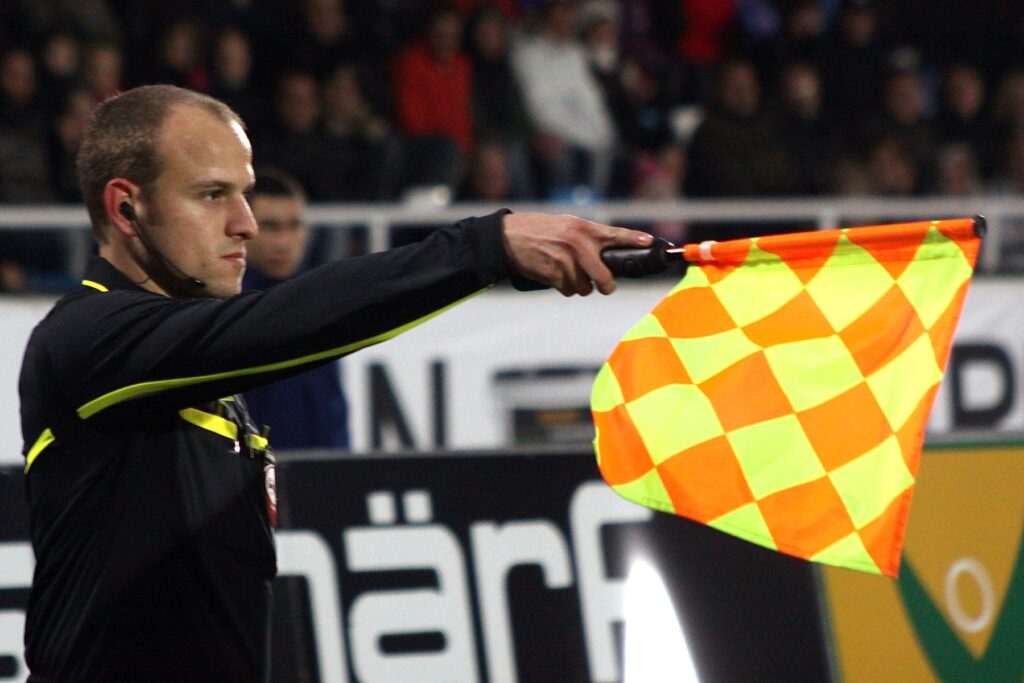
A close offside replay can look like a simple computer verdict. In reality, semi-automated offside technology (SAOT) helps officials answer a measurement question, while football’s laws determine whether an offence occurred. This guide helps spectators and amateur coaches interpret the evidence rather than assume every graphic is a complete explanation.
1. Start with the rule, not the graphic
Under IFAB Law 11, an attacker can be in an offside position without committing an offence. Compare the eligible parts of the attacker’s body with both the ball and the second-last opponent in the opponents’ half when a teammate plays the ball. Hands and arms do not count. Active involvement matters, and direct receipts from a throw-in, goal kick or corner are exceptions.
2. Understand the data behind the line
FIFA describes systems that combine optical player tracking, ball tracking and, where available, measurements from a sensor inside the ball. The software estimates relevant body positions and proposes a contact moment and offside line. Implementations vary by competition: do not assume a local league has the same equipment as a FIFA tournament.
3. Separate the measurement from the decision
Video officials can inspect the proposed frame and line, and use manual alternatives if necessary. The referee retains decision-making authority. Whether an attacker obstructed an opponent’s view or whether a defender deliberately played the ball can require interpretation beyond a position measurement.
4. Review a replay in four steps
- Identify the teammate’s relevant touch rather than the moment the receiver controls the pass.
- Check which attacker and defender the graphic represents, and whether the ball is the relevant reference.
- Look for active involvement and applicable exceptions.
- Compare your interpretation with the official decision and competition explanation. Mark unclear footage as inconclusive.
5. Use AI for amateur match review, not unofficial refereeing
With permission to use footage, a coach can ask a video analysis tool to index candidate passes and provide timestamps for discussion. A single sideline camera may lack calibration, depth information or a clear view of the ball. Do not treat an AI-drawn line as equivalent to a stadium tracking system. For example, ask the tool to identify visible evidence, missing camera angles and uncertain contact frames, then review each clip yourself.
See our evidence-first team sports video review guide for a practical workflow.